OPTION TRADING
Options trading are financial instrument's that are derivatives based on the value of underlying securities such as stocks. An options contract offers the buyer the opportunity to buy or sell—depending on the type of contract they hold—the underlying asset. Unlike futures, the holder is not required to buy or sell the asset if they choose not to.
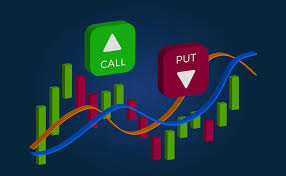
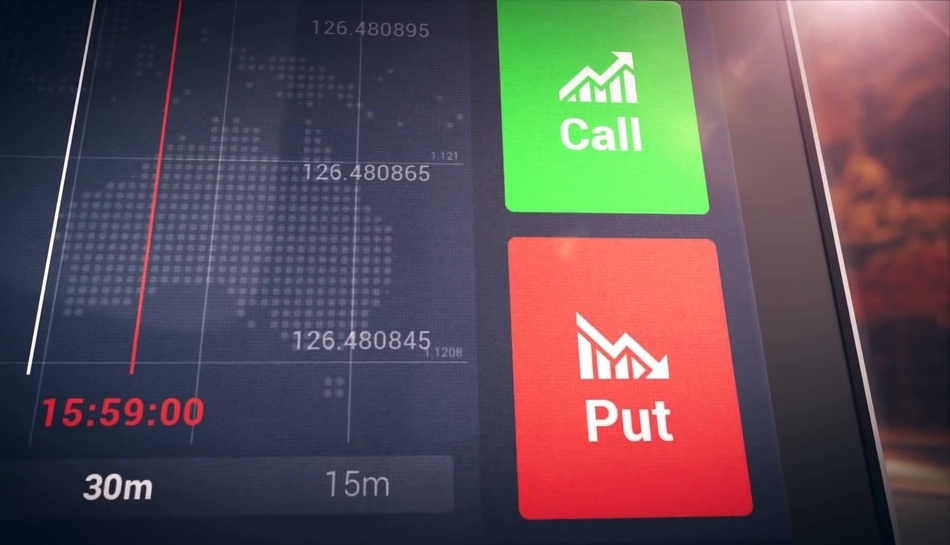
Call options allow the holder to buy the asset at a stated price within a specific timeframe.
Put options allow the holder to sell the asset at a stated price within a specific timeframe.
Each option contract will have a specific expiration date by which the holder must exercise their option. The stated price on an option is known as the strike price. Options are typically bought and sold through investment companies, online or retail brokers.
Investment Strategies
A.) Self Investing
There are very good strategies for trading options, but all involve a high amount of risk. You can use any of the strategies listed below or simply have an investment company handle your trades and bear the risk for you. Some strategies include:
Covered Call
Married Put
Credit Spreads vs. Debit Spreads
Straddles
Strangles
Iron Condors
Butterfly Spreads
These are basic trading strategies for trading Options. Tjhere are even more advanced ways.
B.) Broker Investing
A more convenient and profitable way to invest in Options would be to have an investment company handle or undertake your trades for you. This method helps minimize risks and maximize profits, as the company brings in years of experience and skill. This is one of the reasons we set up COINAREA IO LTD to help Investor's achieve this without middle man involvement..
KEY BENEFITS OF OPTIONS INVESTMENT
High Potential Return +
You don't need a calculator to figure out if you spend less money and make almost the same profits, you'll have a higher percentage return. When they pay off, that's what options investment typically offer to Investor's. For example, using the scenario from above, we'll compare the percentage returns of the stock (purchased for $50) and the option (purchased at $6). Let's say the option has a delta of 80, meaning the option's price will change 80% of the stock's price change. If the stock were to go up to $5, your stock position would provide a 10% return. Your option position would gain 80% of the stock movement (due to it's 80 delta), or $4. A $4 gain on a $6 investment amounts to a 67% return—much better than the 10% return on the stock. Of course, when the trade doesn't go your way, options can exact a heavy toll: there is the possibility you will lose 100% of your investment , this is where the help of COINAREA IO LTD navigate into the possibility of Options trading.
Managed Risk +
There are situations in which buying options are riskier than owning equities, but there are also times when options can be used to reduce risk. It really depends on how you use them. Options can be less risky for investors because they require less financial commitment than equities, and they can also be less risky due to their relative imperviousness to the potentially catastrophic effects of gap openings. Options are the most dependable form of hedge, and this also makes them safer than stocks. When an investor purchases stocks, a stop-loss order is frequently placed to protect the position. The stop order is designed to stop losses below a predetermined price identified by the investor. The problem with these orders lies in the nature of the order itself. A stop order is executed when the stock trades at or below the limit as indicated in the order.
More Strategic Alternative +
The final major advantage of options investment is they offer more investment alternatives. Options are a very flexible tool. There are many ways to use options to recreate other positions. We call these positions synthetics. Synthetic positions present Investor's with multiple way's to attain the same investment goal's, which can be very useful. While synthetic position's are considered an advanced option topic, options trading offer many other strategic alternatives. For example, many Investor's use brokers who charge a margin when an investor wants to short a stock. The cost of this margin requirement can be quite prohibitive. Other Investor's use broker's who simply do not allow for the shorting of stocks, period. The inability to play the downside when needed virtually handcuffs investors and forces them into a black-and-white world while the market trades in color. But no broker has any rule against Investor's purchasing puts to play the downside, and this is a definite benefit of options trading.